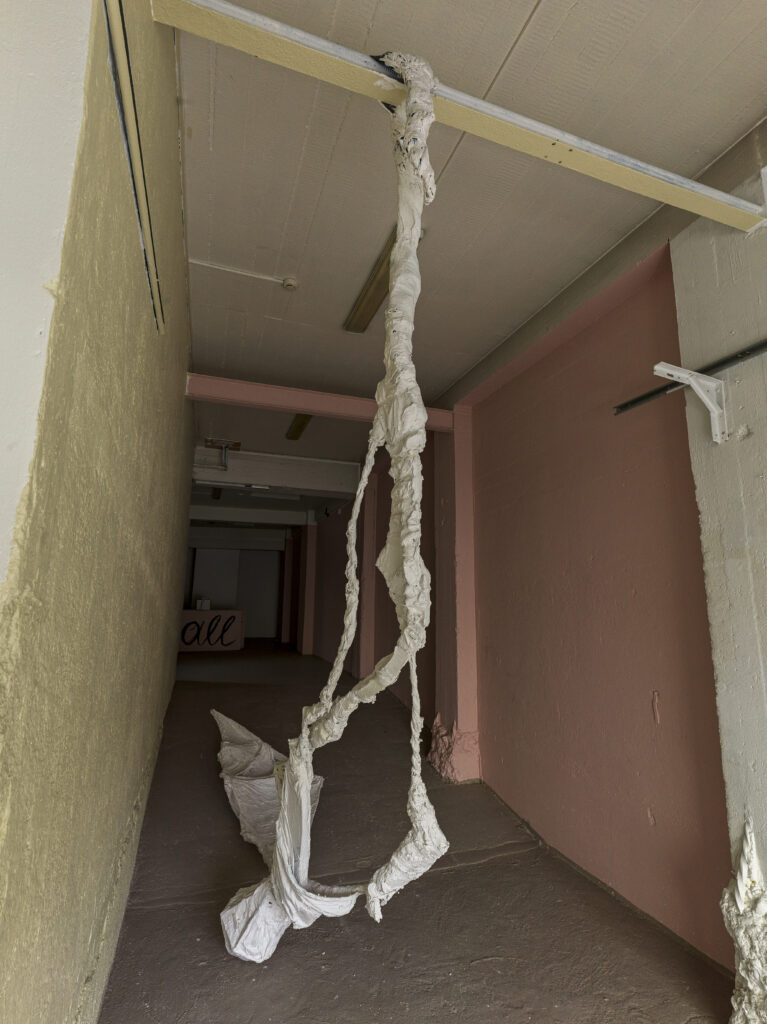
Spit (2024)
Sculpture
The work Spit captures an intriguing paradox by combining the physical and the abstract in a highly symbolic way. You point out that spit, as a physical substance, serves a practical purpose—removing what is undesirable from the body. At the same time, it acts as a means of expressing emotions and attitudes, often as a protest or sign of dissatisfaction toward a situation or person.
Interestingly, spit is not only connected to bodily function but also plays a role in sexual contexts, giving it a multifaceted symbolic meaning in societal situations. The slime becomes something that is not only part of our physical life but also a form of communication, capable of expressing both interest and disdain.
Spit, as a phenomenon, is thus fascinating from a sociological and cultural perspective. It has direct physical functionality but also carries a subjective meaning that shifts depending on the context. Such paradoxes between the body and the mind often lie at the heart of artworks that explore human experience.
In Katrín Inga’s piece, where spit is displayed in an exhibition space, an interesting platform is created to deeply examine the complexity of this phenomenon. By presenting spit as an artwork, she transforms it from something mundane, even despised, into a subject that makes the viewer pause and reflect on both its biological and social dimensions.
The artwork becomes a symbol of the paradoxes that saliva embodies—both a physical waste product and a symbolic tool of expression in society. By hanging it in an exhibition space in an artistic and abstract context, the work gains new dimensions. In this way, Katrín Inga opens up questions about how we relate to our bodies, societal norms, and even forms of artistic expression.
This creates an unusual dialogue between biological and cultural factors, inviting the audience to view spit as a phenomenon with fresh eyes—not just as something physical, but also as a symbolic and abstract form of art.